Venezuela: Chronicles of Hunger and Resistance
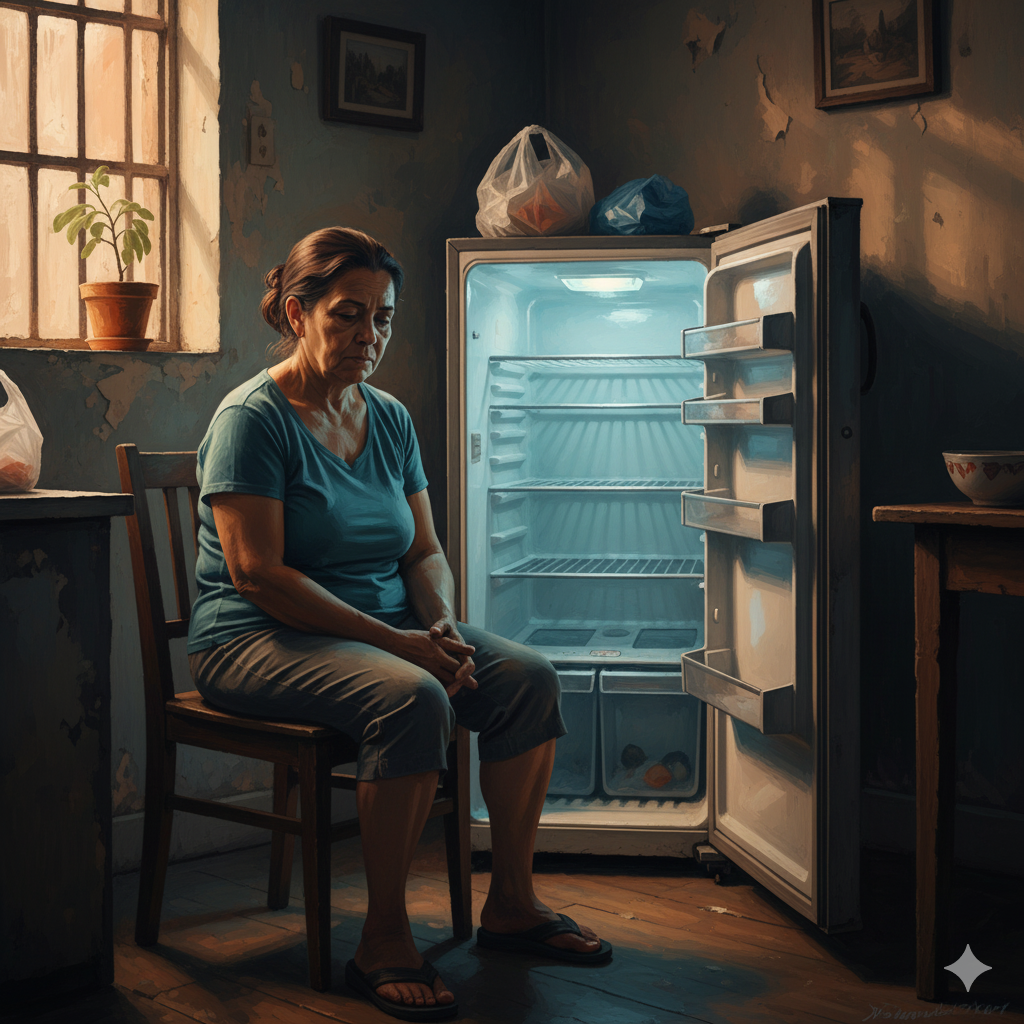
The refrigerator hums like a ghost that forgot what food sounds like.
It’s been three days since Lucía last opened it, not because she doesn’t dare, but because she already knows what’s inside — nothing but air that smells faintly of old onions and hope.
She sits by the window with her daughter, brushing the girl’s hair while the power flickers again. Outside, the city moves in slow motion: people waiting for buses that never come, soldiers at the corner pretending to protect, and a sun that burns too bright for a country that forgot what warmth feels like.
Lucía used to be a teacher. Now she sells small paper bags of rice she measures with trembling hands. “The hardest thing,” she says, “is explaining to your child that this isn’t forever when it keeps feeling like it is.”
The radio plays softly, an old cassette recording of protest songs. The singer’s voice cracks in the middle, the same way people’s voices do now when they talk about tomorrow.
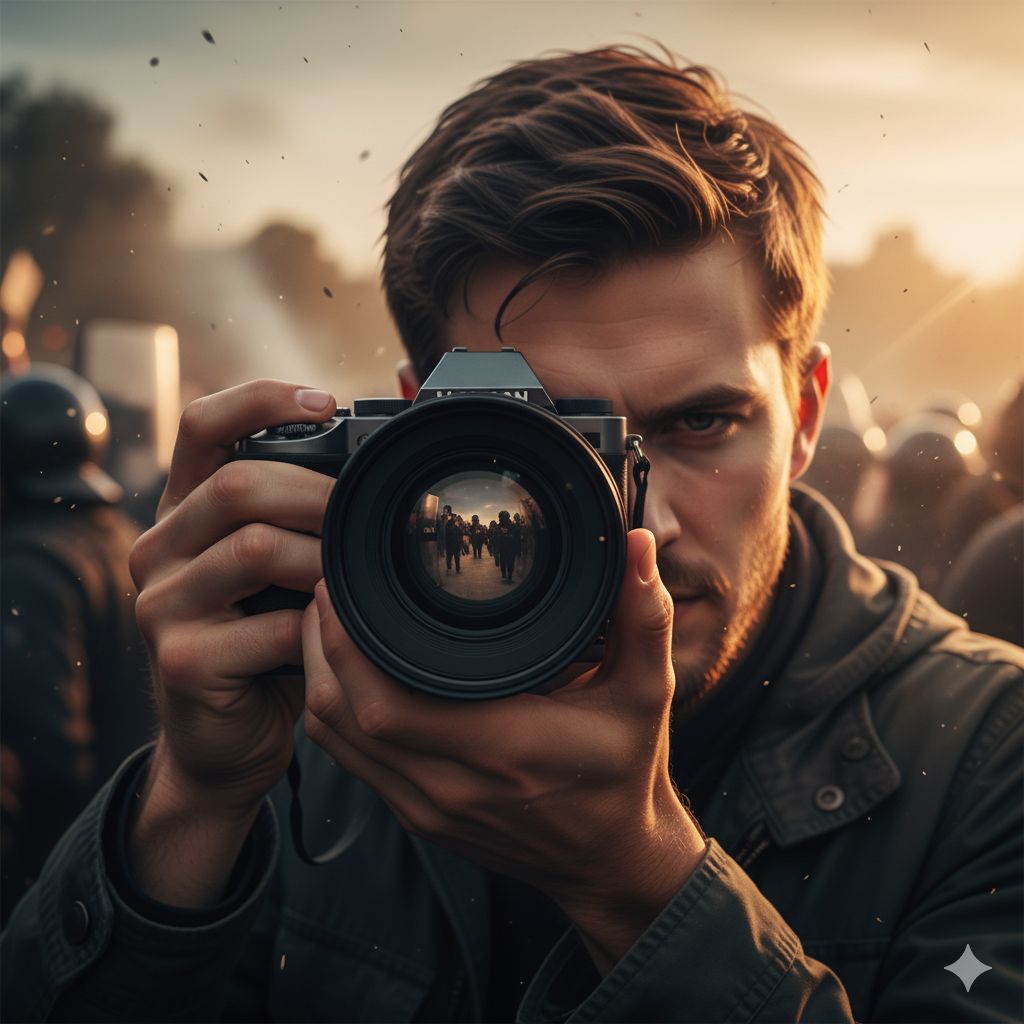
Diego walks through the university gates, backpack hanging empty, camera inside wrapped like contraband. The building smells of tear gas and chalk.
He joined journalism thinking truth was a weapon. Now he knows it’s a wound.
He used to film lectures; now he films lines — people waiting for bread, for gas, for medicine, for miracles. His camera lens fogs from the heat and the breath of a hundred strangers pressed together, waiting for a delivery that may never come.
“Don’t show their faces,” a woman warns. “It’s safer.”
But how do you tell a story without eyes?
When the protests began, he livestreamed everything — the chants, the smoke, the chaos. Until one night, his stream froze mid-scream, and the internet went black. For hours, the country vanished behind a digital curtain.
When it came back, so had the soldiers.
Now Diego films quietly. He hides memory in memory cards taped under his shoes, crossing checkpoints with the calm of someone who has learned that fear, too, can be smuggled.
At night, they all hear the same sound — the silence between power cuts. The pause before the generator coughs back to life. The brief darkness where the world feels suspended, holding its breath.
Ana writes in those moments. Her words are small revolutions folded into metaphors. She used to be a columnist. Now she’s a whisper.
Each time she sends a new piece to her contact abroad, she signs it with a different name: “Rosa”, “The woman in the storm”, “No one”.
She writes about the hunger that isn’t only in the stomach but in the heart — the hunger for dignity, for truth, for noise that doesn’t come from sirens.
Sometimes, she imagines her words flying across the sea like birds that remember a different sky.
When the blackout lasts longer than usual, the city becomes a choreography of candlelight. Shadows move like dancers against the walls. Children laugh because they don’t yet understand what scarcity means.
Lucía hums an old lullaby as the night stretches. Her daughter sleeps on her lap. “Someday,” she whispers, “you’ll tell this story differently.”
She doesn’t know that, a few miles away, Diego is still awake, watching the footage he captured that morning — a man shouting into a microphone that didn’t work, a banner ripped in half by wind, a hand raised before a wall of shields.
He pauses the frame on that hand.
There’s something sacred about it — an instinct older than words, older than governments. The need to rise.
Ana’s final message that week is short. “They’ve taken my neighbor. They say for questioning. We know what that means.”
Then she adds one last sentence before deleting the chat: “But the words are already out.”
Morning comes again, thick and slow. The news channels say everything is normal. The streets say otherwise.
Vendors shout prices that no one can pay. A bus passes with a broken slogan on the side: “Patria o nada.”
The passengers stare through the windows as if they already chose the second option.
And yet — in the noise, the dust, the despair — small things keep happening. Someone shares a piece of bread. Someone laughs in a queue. Someone draws a flag on a wall, the colors bleeding but still bright.
Resistance isn’t always a riot. Sometimes it’s just showing up.
Diego uploads a new video that night. It’s only six seconds long:
a close-up of a hand releasing a dove made of paper.
The caption says nothing.
It spreads like fire — through unstable Wi-Fi, through fear, through the invisible networks of those who still believe.
Somewhere, in a dark room with a silent fridge, Lucía sees it on her daughter’s borrowed phone.
“Look,” she says softly. “It’s flying.”
No government can ration faith. No border can hold imagination.
When everything else collapses, stories remain — small, fragile, unstoppable.
Hunger has a sound here.
It’s the growl of empty stomachs, yes — but also the murmur of people remembering who they are.
That’s how revolutions begin.
Not with noise, but with remembering.