
The voice that will not be silenced: young Cubans facing state silence
The night was too quiet for Havana. The city usually hums — even in its silence — with the static of old radios and the echo of a thousand lives pressed together under one sky. But that night, the air itself felt monitored, as if the sound could betray us.
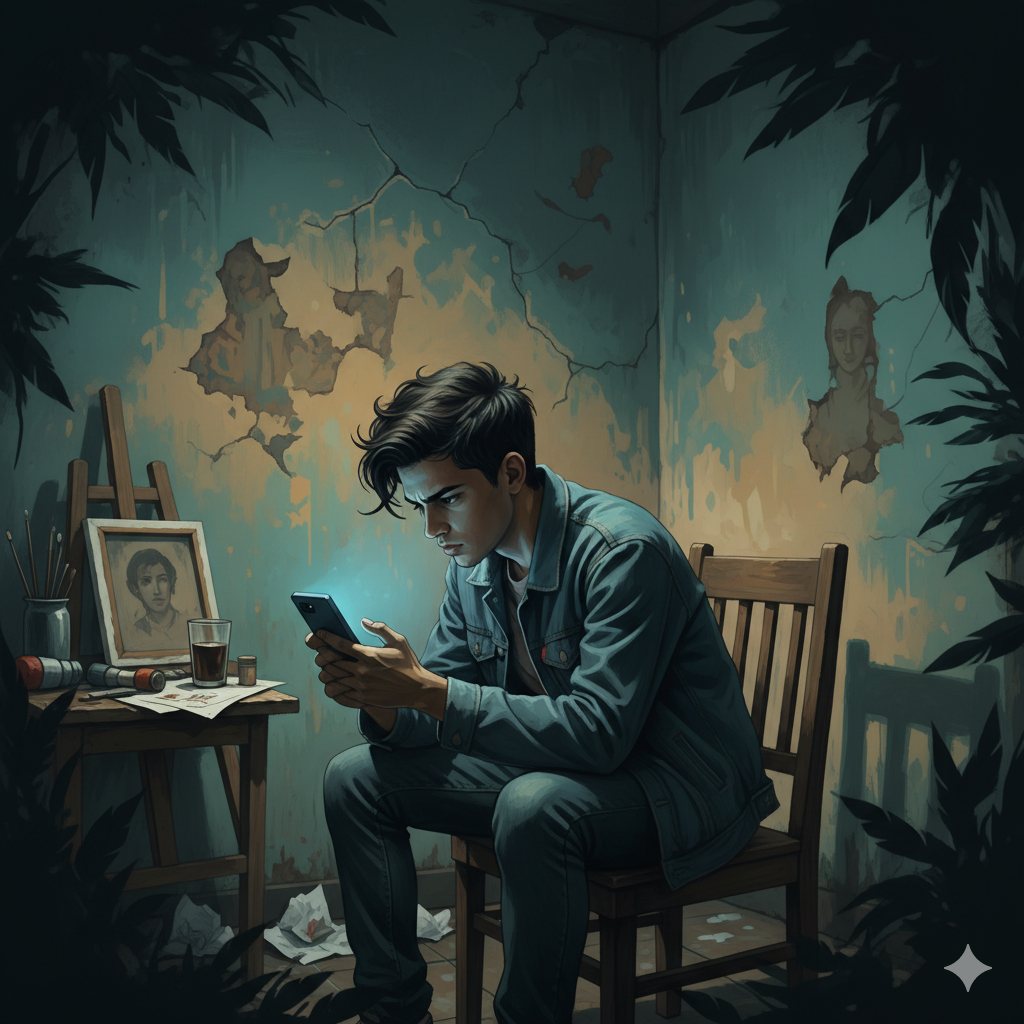
I remember the glow of the phone screen against my face — the only light in the room. The signal bar flickered, then vanished. Again.
Somewhere, beyond the cracked walls and faded posters of the revolution, someone had decided that we’d already said too much.
For months, I had been posting sketches online — faces drawn from memory, people who had disappeared. My art wasn’t political, not in the way they said. I only drew what I saw: eyes that used to look up, now turned down; hands that reached for a future that never came. I posted one of those drawings at midnight. By sunrise, the post was gone, my account locked, and two men stood outside my door pretending not to be watching.
My mother told me to delete everything. “Art can wait,” she whispered. “Freedom can’t feed you.”
But even she didn’t believe herself anymore.
At first, we whispered. In cafés, at bus stops, in the corridors of the university. Then, when the internet came — slow, fragile, expensive — we thought the whisper would become a voice. We believed in pixels as if they were prayers.
And maybe they were. For a while.
When I posted again, it was from a friend’s account, under a fake name, through a VPN that worked like an old, wheezing lung. I remember the first message that arrived: “We hear you.” Just three words. From somewhere far away. Maybe Miami. Maybe Madrid. It didn’t matter. Someone heard.
And that was enough to keep me breathing.
Every artist here carries two sketchbooks. One for the officials, one for the truth. Mine was filled with bodies in motion — people running but never arriving, hands gripping invisible bars, faces illuminated by the blue light of screens. The government called us dreamers. Subversives. Enemies of stability.
But really, we were witnesses.
The silence here is not empty. It’s engineered. It hums in the frequency of fear, woven through the wires, the broadcasts, the slogans painted on peeling walls. It lives in every sentence that stops halfway, every look exchanged before a name is spoken.
When my friend Daniela was arrested, they said it was for disturbing public order. Her disturbance was a poem — a short one, written in chalk on a bridge. It said, “Tomorrow will need witnesses.”
They made sure she wouldn’t see that tomorrow.
There’s something strange about censorship: it gives memory more power than speech. When they erase a word, it echoes louder. When they silence a song, the melody crawls into your head and refuses to leave.
So I learned to paint the silence — to turn it into something visible.
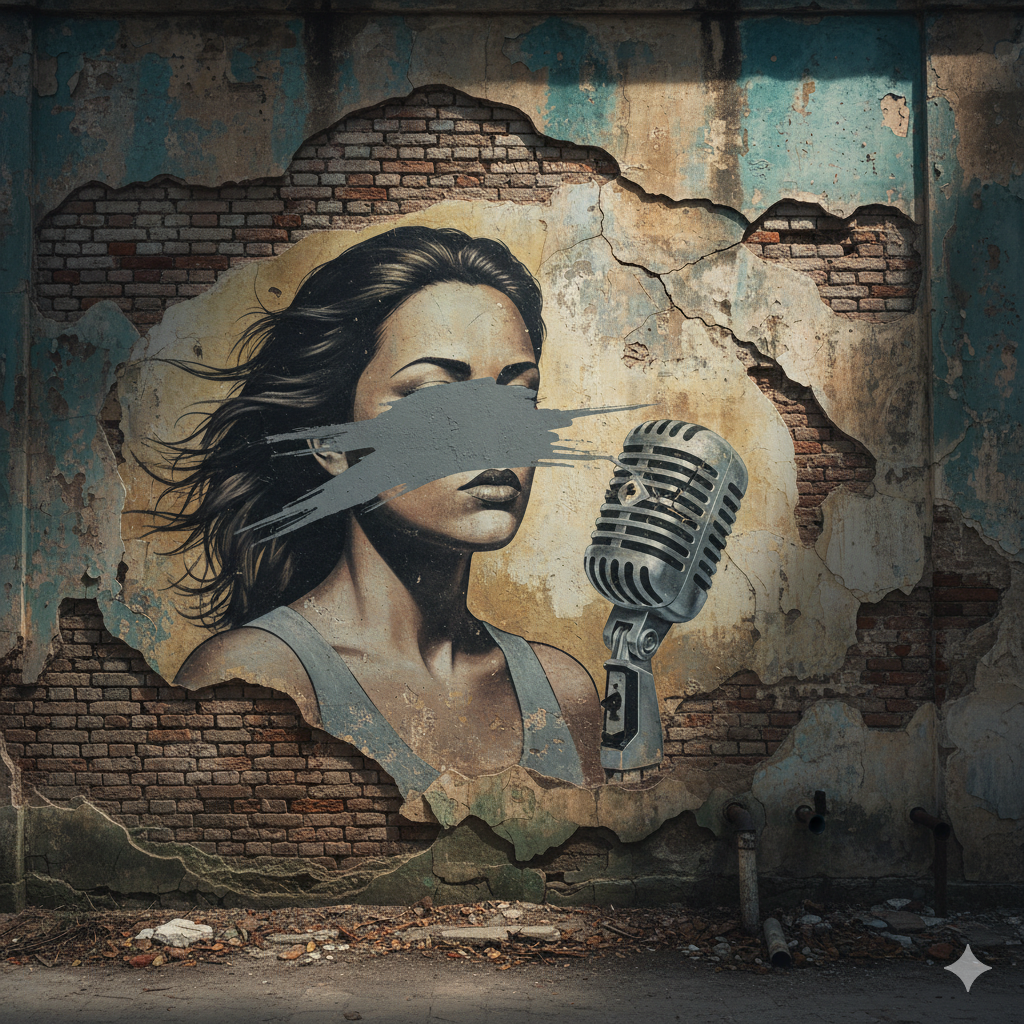
The last mural I finished was on an abandoned wall near Vedado. No one had given permission, of course. It was a portrait of a girl blowing into a broken microphone. Around her, the air twisted like smoke — blue, red, gold. The night guard said nothing as he watched me paint. When I returned two days later, it was covered with gray.
But from certain angles, under the right light, you could still see her lips, frozen mid-breath.
Sometimes I think repression isn’t about control. It’s about exhaustion — to make you so tired of trying that silence becomes a refuge. But in that quiet, I also found something else: defiance. Every erased image, every deleted post, every censored word becomes an act of faith. Proof that truth existed, even if briefly.
The last time I uploaded a video, it was only five seconds long. A candle on a windowsill. No captions, no message. Just a flame shaking against the night. It went viral before they pulled it down.
People sent me photos of candles lit in their homes, their faces hidden, their hands trembling but steady.
We became a network of small lights — each one fragile, but together, impossible to extinguish.
They can delete the post, block the account, shut down the Wi-Fi.
But they can’t silence what we’ve already imagined.
The revolution they fear most is the one inside our minds.
I still live here. I still draw. I still post, sometimes under names that aren’t mine, sometimes in places they haven’t yet found. The signal still flickers. The fear still breathes.
But so do we.
Because the voice doesn’t fade. It only changes shape — from word to image, from sound to silence, from one generation to the next.
It’s there, in every wall repainted, in every line redrawn, in every candle that refuses to go out.
Freedom doesn’t always roar. Sometimes it whispers.
And sometimes, whispering is enough to shake a nation awake.
Good theme !